Why Cooking Temperature Matters: How Heat Affects Nutrients in Your Food
High heat is the single most destructive force in a modern kitchen - and most people use far more of it than necessary. Cold-pressed oils, raw honey, stone-ground flours, and minimally processed foods all depend on low-temperature handling to preserve what makes them nutritionally valuable.

Heat is the most powerful tool in the kitchen and the most indiscriminate. It transforms raw ingredients into cooked food, makes proteins digestible, destroys harmful bacteria, and creates the flavours and textures that make food pleasurable. It also degrades vitamins, oxidises fats, destroys enzymes, and in some cases creates harmful compounds that were not present in the original ingredient.
Understanding what heat does - and at what temperatures different nutrients are affected - changes how you use your kitchen. It explains why cold-pressed oils are worth buying, why raw honey should not be stirred into boiling tea, why stone-ground whole wheat flour is better than refined atta, and which cooking methods preserve the most nutritional value across different food types.
What Heat Actually Destroys: A Temperature Guide
| Temperature Range | What Is Affected | Practical Implication |
|---|---|---|
| Below 40 degrees C | Safe for virtually all nutrients and enzymes | Add honey, use raw oils as finishing, consume fermented foods - all nutrients intact |
| 40 to 70 degrees C | Enzymes begin denaturing; vitamin C starts degrading; some B vitamins affected | Raw honey added to liquid above 40 degrees C loses enzyme activity; vitamin C in vegetables starts reducing |
| 70 to 120 degrees C | Most water-soluble vitamins (B vitamins, vitamin C) degrade significantly; proteins denature (beneficial for digestibility) | Standard cooking range for most Indian dishes - significant vitamin loss but proteins more digestible |
| 120 to 180 degrees C | Fat-soluble vitamins (A, E, K) begin degrading; polyunsaturated fats start oxidising; Maillard reaction occurs | Tadka and high-heat saute range - use stable fats (ghee, mustard oil) rather than PUFA-rich oils |
| Above 200 degrees C | Oils begin smoking and producing harmful aldehydes; acrylamide forms in starchy foods; most nutrients substantially degraded | Deep frying range - use only high smoke point fats; minimise duration; avoid burning |
Oils and Heat: Why Extraction Method Determines Cooking Suitability
Cold-pressed oils retain natural antioxidants, tocopherols, and plant compounds that refined oils have lost. These compounds are valuable nutritionally - and they also affect how the oil behaves under heat. Natural antioxidants in cold-pressed oils provide some protection against oxidative degradation at moderate temperatures, which is one reason good cold-pressed oils perform adequately for everyday cooking despite having lower smoke points than refined oils.
The critical issue is polyunsaturated fat content. Oils high in polyunsaturated fatty acids (PUFA) - sunflower, flax, most nut oils - oxidise faster at high temperatures and produce aldehydes and other harmful compounds when repeatedly heated or taken above their smoke point. This is why cold-pressed sunflower oil is better suited to dressings and low-heat cooking than high-heat frying, while A2 bilona ghee - primarily saturated and monounsaturated fats with a smoke point of around 250 degrees C - handles high heat without oxidising.
Cold-pressed mustard oil sits in the middle - its erucic acid and monounsaturated fat content give it reasonable heat stability for everyday Indian cooking, while its natural pungency signals that it is best used at moderate rather than extreme temperatures.
Honey and Heat: A Specific Warning
Raw honey is one of the most heat-sensitive foods in common use, and also one of the most routinely overheated. The enzymes in wild forest honey - glucose oxidase (which generates antimicrobial hydrogen peroxide), diastase, and invertase - begin denaturing above 40 degrees Celsius and are substantially destroyed by 60 degrees. Most cups of tea or warm water in which people stir honey are between 70 and 90 degrees.
The practical rule is simple: add honey to liquid that is warm enough to drink comfortably but not hot enough to be uncomfortable to hold. If you can hold your hand around the cup without discomfort, the liquid is probably below 40 degrees and the honey's active compounds are preserved. If the cup is too hot to hold, the honey is being heated into a nutritionally ordinary sweetener.
Ayurvedic texts specifically caution against heating honey - a prohibition that predates modern enzyme chemistry by millennia but is biochemically justified by what we now understand about enzyme heat sensitivity.
Vegetables and Heat: Cook Less, Retain More
Vitamin C and the B vitamin folate are the most heat-sensitive vitamins in vegetables. Both are water-soluble, which means they also leach into cooking water. Boiling vegetables for extended periods in large quantities of water is the most destructive cooking method for these nutrients - losses of 50 to 80% are common.
Steaming, pressure cooking for short durations, and stir-frying at high heat for brief periods all preserve significantly more nutrients than extended boiling. Consuming the cooking liquid - as in dals and soups - recovers the water-soluble nutrients that leach into the water during cooking.
Stone-Ground Flour and Heat: The Milling Connection
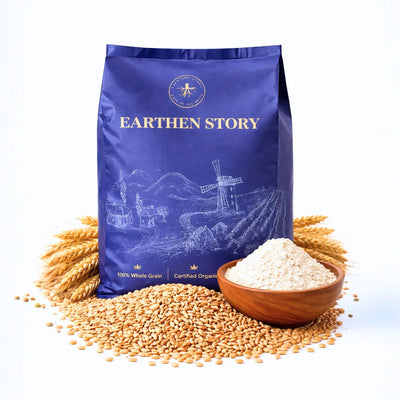
The heat generated during roller milling - the industrial process used to produce most packaged atta - is itself a form of food processing that degrades nutrients before the flour even reaches the kitchen. Steel rollers generate significant friction heat that damages heat-sensitive B vitamins in the wheat germ and accelerates oxidation of the natural oils present in the bran. Stone grinding generates far less heat because the stones turn slowly, which is one of the reasons stone-ground whole wheat flour retains more of the grain's original nutritional value.
Putting It Together
The most nutritionally coherent kitchen is one that matches cooking method to food type and uses heat deliberately rather than habitually. High-heat methods for proteins that need them. Gentle or no heat for heat-sensitive nutrients. Stable fats for high-temperature cooking. Raw or minimally processed formats for foods where the unheated state is the most valuable.
For a complete guide to which oils handle which cooking temperatures and why, see our article on cooking oils for the Indian kitchen. And for the broader story of how cold pressing preserves what refining destroys, our article on cold-pressed vs refined oils covers the extraction process and its nutritional consequences in full.
Looking for ways to put these ingredients to use? Browse our full recipe collection for ideas that make real food genuinely easy to cook.
For more ingredient guides, food system insights, and traditional food knowledge, explore the full Earthen Story Discover library.