Ghee
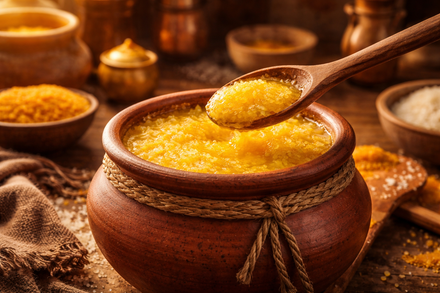


A2 Gir Cow Ghee from Indigenous Breed
Our ghee is sourced exclusively from the milk of indigenous Gir cows. These cows are an indigenous Indian breed that produce A2 beta-casein milk. They graze freely on grass and seasonal fodder in Gujarat rather than being fed commercial feed in stalls. The A2 protein distinction is significant for digestive comfort, as A2 beta-casein breaks down differently in the gut compared to the A1 protein found in most commercial dairy breeds. Many people who find regular ghee or dairy difficult to tolerate find A2 Gir Cow Ghee much easier to digest.
The Traditional Bilona Method
We use the authentic Bilona method to extract our ghee, which is a traditional multi-step process. Whole A2 milk is first fermented into curd overnight using a natural starter. This curd is then hand-churned with a wooden bilona to separate the white butter, called makhan. Finally, the makhan is slow-cooked over a controlled flame until the moisture evaporates and the milk solids separate. This low-heat, manual process yields only about 25 to 30 litres of ghee from 100 litres of milk - a lower yield than cream-based methods, but one that preserves butyric acid, conjugated linoleic acid, and a rich, grainy texture. For a full explanation of why this process produces a nutritionally superior product, read our article on why ghee has been called a superfood traditionally.
Lab Tested for Purity
To ensure the highest safety standards, every batch of our ghee is lab-tested for 270 plus pesticide residues. Our product is 100% pure, with no artificial colours, no preservatives, and absolutely no adulteration with vegetable fat or refined oil, which are common in cheaper ghee products. By performing rigorous batch testing, we guarantee a clean, pesticide-free ghee that is safe for your entire family.
Nutritional Benefits: Healthy Fats & Vitamins
Our Bilona ghee is a concentrated source of essential nutrients. It is naturally rich in Butyric Acid, which supports gut health, and Conjugated Linoleic Acid (CLA), known for its antioxidant properties. The traditional slow-cooking process preserves vital fat-soluble vitamins, specifically Vitamin A, D, E, and K. These nutrients are largely absent in mass-produced, cream-based ghee but are retained in our hand-churned process. To understand how ghee fits alongside other cooking fats in the Indian kitchen - including smoke points and best uses for each - read our complete guide to cooking oils for the Indian kitchen.
Daily Usage & Lifestyle
With its high smoke point, A2 ghee is one of the most stable and safest fats for everyday Indian cooking, from tempering dals to sauteing vegetables. Usage: Add a teaspoon of ghee to hot rotis, dal, or steamed rice to improve nutrient absorption and enhance flavor. For a traditional wellness ritual, a teaspoon of ghee in a glass of warm milk or water at night can help support smooth digestion and maintain a healthy digestive tract. For practical daily recipe formats, try our ghee coffee or moringa ghee rice - both ready in minutes.
Looking for recipe ideas using these ingredients? Browse our full recipe collection for inspiration. For more on ingredients, processing methods, and food knowledge, visit the Earthen Story Discover library.
Food Knowledge. Recipes. Updates.
Join our community of conscious food lovers. Seasonal recipes, ingredient guides, and traditional food knowledge — delivered to your inbox.