Why Is It Important to Eat Organic?
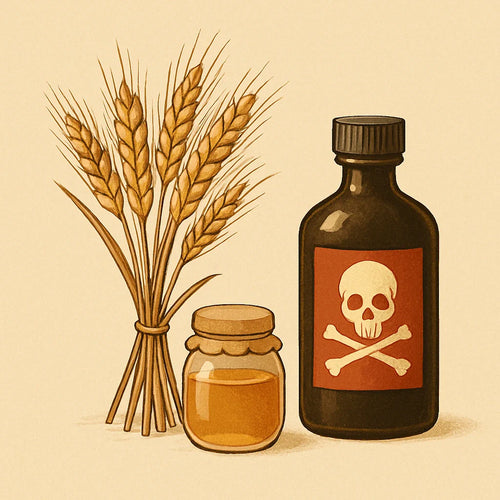
Organic farming is not a lifestyle trend. It is a response to a measurable chemical risk in conventionally grown food - one that accumulates in the body over decades. Here is why it matters and where to start.

Every time you pick up a vegetable at the market, you are making a choice that goes beyond taste or price. You are deciding how much chemical residue you are willing to absorb into your body - and your family's body - every single day. That is the real stakes of the organic question.
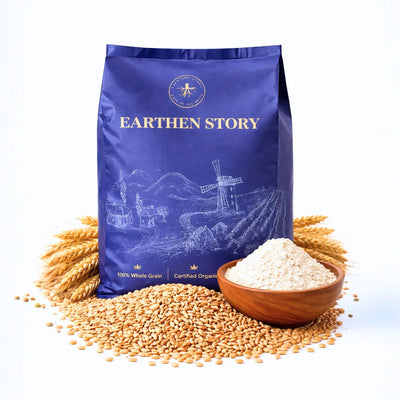
The word "organic" has been diluted by marketing, but its core meaning is precise: food grown without synthetic pesticides, artificial fertilisers, or chemical preservatives. Whether you are buying organic wild forest honey, certified organic A2 ghee, pesticide free whole wheat atta, or fresh produce, the question is always the same - was this grown the way food was meant to be grown?
The Invisible Accumulation Problem
Pesticides are not a one-time exposure risk. They are a daily accumulation problem. Regulatory bodies set "acceptable daily intake" limits for individual pesticides - but nobody eats only one pesticide. The average Indian plate today carries residues from multiple chemicals simultaneously, and the combined effect of this cocktail has almost no research behind it.
The more alarming issue is bioaccumulation. Many pesticide compounds are fat-soluble, which means they do not leave your body through sweat or urine. They lodge in fatty tissue and accumulate over years. A 30-year-old eating conventionally farmed food has been accumulating residues since childhood.
Children face a compounded version of this risk. Their body weight is lower, so the same residue quantity represents a proportionally higher dose. Their detoxification organs are still developing. And they have more years ahead for cumulative damage to compound.
Conventional Farming vs Organic Farming
| What Changes | Conventional Farming | Certified Organic Farming |
|---|---|---|
| Pest control | Synthetic pesticides, many banned in EU and US | Natural pest management only |
| Soil nutrition | Synthetic nitrogen fertilisers | Compost, crop rotation, natural inputs |
| Residue testing | Not required for domestic sale | NPOP certification required; lab testing recommended |
| Long-term soil health | Degrades over time with chemical use | Builds soil microbiome and fertility |
| What you absorb | Multiple residues daily across all foods | Significantly lower residue burden |
What the Farming System Actually Uses
India has 293 registered pesticides. A 2022 study found that 169 of them - 58% - are classified as extremely hazardous. Several are banned in Europe and the United States but continue to be used freely in Indian agriculture. As we cover in detail in our article on why India uses pesticides banned in Europe and the US, some of these chemicals - like Mancozeb and Chlorpyrifos - have been off the market in regulated countries for years.
This affects everything on your plate - from ragi flour and cold-pressed oils to honey sourced near conventionally farmed fields and seeds where pesticide residue testing is rarely demanded by buyers. Pesticide free food in India is not the default; it requires deliberate effort from producers.
The Testing Gap in Organic Labelling
Here is the honest complexity: the word "organic" on a label is not enough. Certification without testing is a paper guarantee. Soil contamination from neighbouring farms, water runoff, and weak enforcement mean that NPOP certified organic produce can still carry residues. This is why lab testing matters as much as the India Organic certification mark.
Brands that run multi-pesticide panel tests - 200 to 250 pesticide checks - and make those results available are operating at a meaningfully higher standard. Whether evaluating organic ghee, pesticide free honey, or certified organic atta, ask whether the brand tests and whether they will show you the data. Our article on how to spot genuinely organic food walks through exactly what to look for.
Where to Start Practically
Eating fully organic overnight is not realistic for most households. The practical approach is prioritisation. Focus first on foods your family eats daily in large quantities - staple grains like stone-ground whole wheat atta and organic ragi flour, cooking oils, dairy. These are the highest-volume exposure points.
The second priority is children's food. Whatever trade-offs you make for yourself, the case for pesticide free food in India is strongest for children under ten, when the nervous system and endocrine system are in critical development phases. A simple starting point: try our ghee coffee recipe using certified organic A2 ghee - a daily ritual built entirely on clean single-ingredient foods.
Organic is not a premium. It is what food should have been all along - before industrial agriculture decided that yield and shelf life mattered more than what ends up in your body.
Looking for ways to put these ingredients to use? Browse our full recipe collection for ideas that make real food genuinely easy to cook.
For more ingredient guides, food system insights, and traditional food knowledge, explore the full Earthen Story Discover library.