Cold-Pressed vs Refined Oils: What the Label Does Not Tell You
Most cooking oils on Indian shelves have been extracted using chemical solvents and high heat that strip nutrients and alter fat structure. Cold-pressed oils do neither. Here is what the difference actually means for your health.

Pick up most cooking oils from an Indian supermarket shelf and the label will say "refined." That single word covers a process most consumers have never thought about - one that involves chemical solvents, high heat, bleaching agents, and deodorisation. By the time a refined oil reaches your kitchen, it has been processed in ways that fundamentally alter its fat structure, strip its natural nutrients, and in some cases introduce residues of the chemicals used to extract it.
Cold-pressed oils go through none of this. Understanding the difference is not a matter of preference - it changes what you are actually cooking with every day.
How Refined Oils Are Made
The refining process for most commercial cooking oils follows a standard industrial sequence. Seeds or nuts are first crushed to release oil, then subjected to solvent extraction - typically hexane, a petroleum-derived chemical - to extract every last fraction of oil from the remaining pulp. The crude oil is then degummed, neutralised with alkali, bleached with activated clay, and deodorised at temperatures between 200 and 240 degrees Celsius to remove the natural smell that heat and solvents have made unpleasant.
What remains after this sequence is a chemically stable, visually consistent, largely flavourless oil with an extended shelf life. It is also an oil from which most natural tocopherols (vitamin E), polyphenols, and beneficial plant compounds have been removed - either by the heat or by the bleaching and deodorisation steps.
How Cold Pressing Works
Cold pressing uses mechanical pressure alone - a screw press or wooden ghani - to extract oil from seeds or nuts without heat or chemical solvents. The temperature during pressing stays below 45 to 50 degrees Celsius, which preserves heat-sensitive nutrients, natural flavour compounds, and the fat-soluble vitamins present in the source ingredient.
The oil that results is unrefined: it retains its natural colour, smell, and nutritional profile. It also has a shorter shelf life than refined oil because the natural antioxidants have not been stripped - they are doing their job of protecting the oil, but they are consumed in the process over time. This is a feature, not a flaw.
| What Changes | Refined Oil | Cold-Pressed Oil |
|---|---|---|
| Extraction method | Chemical solvents (hexane) plus high heat | Mechanical pressure only, below 50 degrees C |
| Natural nutrients | Largely removed by heat and bleaching | Retained - tocopherols, polyphenols, plant sterols |
| Flavour and aroma | Removed by deodorisation - neutral and flavourless | Natural - mustard is pungent, sesame is nutty, coconut is aromatic |
| Shelf life | Very long - 18 to 24 months | Shorter - 6 to 12 months, store away from light |
| Pesticide residues | Concentrated from source crop, not tested | Depends on source - certified and lab-tested oils are cleanest |
The Pesticide Residue Problem in Oils
There is a dimension to cooking oils that rarely gets discussed: pesticide concentration. Fat-soluble pesticide residues from the source crop - whether mustard, sunflower, groundnut, or sesame - concentrate in the oil fraction during extraction. Refining removes some but not all of these residues. Cold pressing without certified organic source ingredients can actually deliver a higher residue load than refined oil, because nothing has been removed.
This is why sourcing matters as much as extraction method. A cold-pressed yellow mustard oil made from organically farmed, pesticide-tested mustard seeds is categorically different from a cold-pressed oil made from conventionally farmed seeds. As we cover in detail in our article on why India uses pesticides banned elsewhere, the source crop matters more than most consumers realise.
Smoke Points and Cooking Suitability
One common concern about cold-pressed oils is smoke point - the temperature at which an oil begins to break down and smoke. Refined oils generally have higher smoke points because the impurities and free fatty acids that lower smoke point have been removed.
For everyday Indian cooking, this concern is often overstated. Most dal tadkas, vegetable sautes, and roti cooking happen at temperatures well within the smoke point of good cold-pressed oils. Deep frying at sustained high temperatures is where smoke point genuinely matters - and for that use case, refined oils have a functional advantage that is honest to acknowledge.
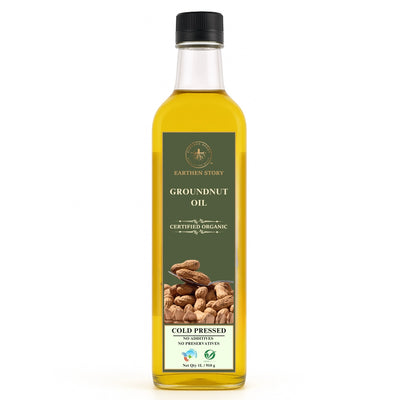
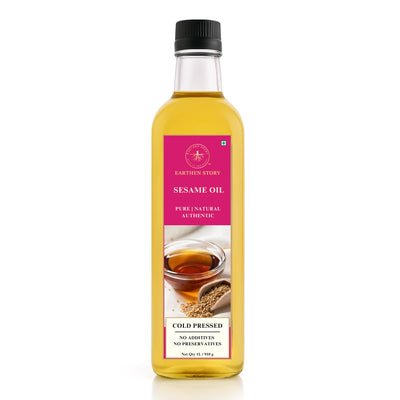
For everything else - dressings, low to medium heat cooking, tempering, and finishing - cold-pressed oils are not just adequate, they are superior. Our cold-pressed groundnut oil works well for everyday cooking, while cold-pressed sesame oil is excellent as a finishing oil over dals and rice dishes where its nutty flavour adds depth.
How to Store Cold-Pressed Oils
Because natural antioxidants are present and active, cold-pressed oils are sensitive to light, heat, and air. Store them in a cool, dark cupboard away from the stove. Once opened, use within three to four months for best quality. The natural cloudiness or sediment you may see in cold-pressed oils is not a defect - it is particulate matter from the source ingredient that refining would have removed.
The shift from refined to cold-pressed cooking oils is one of the most meaningful upgrades a household can make. It is also one of the most immediate - the difference in flavour alone is noticeable from the first meal.
Looking for ways to put these ingredients to use? Browse our full recipe collection for ideas that make real food genuinely easy to cook.
For more ingredient guides, food system insights, and traditional food knowledge, explore the full Earthen Story Discover library.