Dates, Raisins, and Dry Fruits as Natural Energy: What Makes Them Different from Sugar
Dates, black raisins, prunes, and dry fruits are often dismissed as high-sugar foods. The comparison misses everything that matters. Natural sugars in whole dry fruits arrive with fibre, minerals, and polyphenols that refined sugar does not have. Here is what the science actually shows.

Dates and dry fruits are routinely dismissed by calorie-conscious eaters as high-sugar foods to be avoided. The comparison being made - dates versus white sugar, raisins versus a spoonful of refined sucrose - is a category error. Natural sugars in whole dry fruits arrive packaged with fibre, minerals, polyphenols, and a physical food matrix that changes how the body processes them. Refined sugar contains none of these things.
Understanding this distinction matters practically. It changes how you think about the role of Medjool dates, kalmi dates, black raisins, and prunes in a healthy diet - not as indulgences to minimise but as genuinely functional foods that deliver energy, minerals, and gut support simultaneously.
What Makes Natural Sugar in Dry Fruits Different
When you eat a Medjool date, you are consuming roughly 16 to 18g of sugar - primarily fructose and glucose - along with approximately 1.6g of dietary fibre, potassium, magnesium, B6, copper, and a range of polyphenol antioxidants including flavonoids and carotenoids. The fibre and polyphenols slow the rate at which the sugars are absorbed into the bloodstream, moderating the glycaemic response compared to an equivalent amount of sugar consumed alone.
A teaspoon of refined white sugar contains roughly 4g of sucrose and nothing else - no fibre, no minerals, no phytonutrients. The glycaemic impact per gram of sugar consumed is higher, the satiety effect is absent, and there is no nutritional co-payload to offset the caloric load.
Dates: A Comparison Across Varieties
| Date Variety | Texture and Flavour | Notable Nutrients | Best Use |
|---|---|---|---|
| Medjool | Soft, caramel-rich, large and fleshy | Potassium, magnesium, fibre, B6, antioxidants | Natural sweetener in desserts, energy bites, stuffed dates |
| Ajwa | Firm, deep flavour, less sweet than Medjool | Higher polyphenol content, traditionally valued for cardiovascular support | Eaten plain, 3 to 5 daily as a functional food |
| Kalmi (Safawi) | Semi-dry, mildly sweet, medium size | Iron, fibre, good everyday date with moderate sugar content | Daily snacking, mixed into trail mix, with nuts |
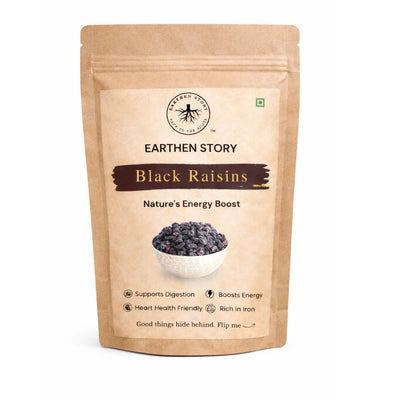
| Black Raisins | Chewy, intense sweetness, concentrated nutrition | Iron, potassium, antioxidants (resveratrol in dark varieties) | Baking, oatmeal, trail mix, natural sweetener in cooking |
| Prunes | Tart-sweet, very high fibre, dense and chewy | Sorbitol (natural laxative), vitamin K, boron for bone health, iron | 3 to 5 daily for gut motility, bone support, and iron |
The Fibre Advantage
Dietary fibre is where dry fruits most clearly separate themselves from refined sugar. Dates contain both soluble fibre - which feeds beneficial gut bacteria and slows glucose absorption - and insoluble fibre, which supports regular bowel movements and reduces transit time in the colon.
Prunes deserve particular mention here. Their gut health benefits are among the most clinically well-documented of any food. The combination of sorbitol (a natural sugar alcohol with mild laxative properties), insoluble fibre, and phenolic compounds makes prunes for digestion one of the most effective dietary interventions for constipation and gut motility. Three to five prunes daily is a meaningful dose that most people find easy to sustain.
Iron and Minerals: The Underrated Benefit
Iron deficiency anaemia affects an estimated 50% of Indian women and a significant proportion of children. While the iron in dry fruits is non-haem iron (less bioavailable than haem iron from animal sources), consuming it alongside vitamin C-rich foods substantially improves absorption. Black raisins are a practical daily iron source that fits easily into a handful eaten as a snack or stirred into morning porridge.
Dates are also a meaningful source of potassium - a mineral that supports blood pressure regulation and is inadequately consumed by most urban Indians eating processed food diets low in whole plant foods. Two or three kalmi dates with a handful of nuts in the afternoon covers a significant portion of the daily potassium requirement.
Polyphenols and Antioxidant Activity
Dry fruits - particularly darker varieties like black raisins, ajwa dates, and prunes - are rich in polyphenol antioxidants. These compounds protect cells from oxidative stress, support cardiovascular health, and feed the specific strains of gut bacteria associated with reduced inflammation.
The polyphenol content in dried fruit is actually higher per gram than in the fresh fruit from which it was made, because drying concentrates the compounds. A handful of seedless black raisins delivers a polyphenol load equivalent to a much larger quantity of fresh grapes.
How to Use Dry Fruits Daily
The most sustainable approach is replacing processed sweet snacks with dry fruits rather than adding dry fruits on top of an existing diet. Two Medjool dates and a handful of mamra almonds in the afternoon is a genuinely satisfying combination that delivers protein, healthy fat, fibre, and minerals together - with a satiety profile that a biscuit or packaged snack cannot match.
For practical formats, our stuffed Medjool dates with mamra almond and gulkand is a simple preparation that takes minutes and works as a dessert, a festive offering, or a daily treat that happens to be nutritionally serious. Our Medjool date and mamra almond energy bites are a batch-prep option - make once, eat across the week.
For a broader view of how nuts and dry fruits fit into daily nutrition, see our guide on why mamra almonds, Brazil nuts, and walnuts deserve a daily place.
Looking for ways to put these ingredients to use? Browse our full recipe collection for ideas that make real food genuinely easy to cook.
For more ingredient guides, food system insights, and traditional food knowledge, explore the full Earthen Story Discover library.