Why Mamra Almonds, Brazil Nuts, and Walnuts Deserve a Place in Your Daily Routine
Not all nuts are equal and not all almonds are the same. Mamra almonds, Brazil nuts, and walnuts each have distinct nutritional profiles that make them genuinely useful as daily foods rather than occasional snacks. Here is what each one does and how much you actually need.

Not all nuts are equal. This is obvious in one sense - a cashew and a walnut are clearly different foods. It is less obvious in a more important sense: the nutritional differences between nut varieties are large enough that choosing which nuts to eat daily is a meaningful decision, not an interchangeable preference.
Three nuts deserve particular attention in the Indian context: mamra almonds, Brazil nuts, and walnuts. Each fills a distinct nutritional role, each has specific qualities that make it more valuable than its more commonly available alternatives, and each is supported by a meaningful body of research on specific health outcomes.
Mamra Almonds vs California Almonds: Why the Difference Matters
Most almonds sold in India are California almonds - the large, uniform, relatively mild variety that dominates global almond production. Mamra almonds are a different variety, traditionally grown in Afghanistan and Iran, with a distinct nutritional profile that makes the comparison worth understanding.
| Characteristic | Mamra Almonds | California Almonds |
|---|---|---|
| Oil content | Higher - 55 to 65% fat, primarily monounsaturated | Lower - 45 to 50% fat |
| Processing | Naturally dried, no pasteurisation required | US regulations require pasteurisation - heat or chemical treatment even for "raw" label |
| Size and texture | Smaller, wrinkled, irregular - signs of natural drying | Larger, uniform, smooth - industrial production characteristics |
| Vitamin E | Higher concentration due to higher fat content | Lower concentration |
| Traditional use | Prescribed in Ayurveda for brain health, soaked overnight before eating | No traditional use history in Indian food systems |
The pasteurisation point is particularly worth understanding. All California almonds sold in the US and most exported markets - including those labelled "raw" - have been pasteurised by law since 2007, either by steam treatment or propylene oxide fumigation. Propylene oxide is a chemical fumigant classified as a possible human carcinogen that is banned for food use in the EU, Canada, and several other markets. It is permitted in the US for almond pasteurisation specifically.
Mamra almonds are not subject to this requirement - they are naturally dried and can be genuinely raw. Soaked overnight in water and eaten in the morning, they are the traditional Ayurvedic format that preserves their full enzyme activity and makes their nutrients most bioavailable.
Brazil Nuts: One Nut, One Mineral, Solved
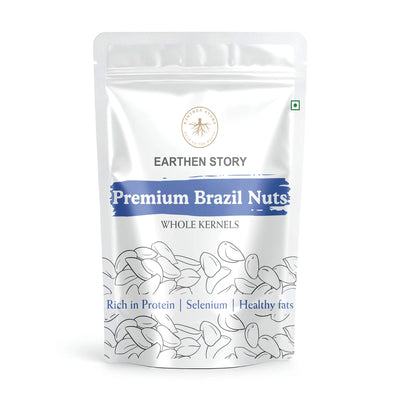
The selenium story with Brazil nuts is straightforward enough to state simply: one Brazil nut daily provides more selenium than most Indians get from their entire diet. Selenium is essential for thyroid function, antioxidant defence, and immune response, and Indian soils are broadly selenium-poor. The fix requires no protocol, no supplement, and no significant dietary change - just one nut.
Brazil nuts are also a meaningful source of magnesium, zinc, and healthy monounsaturated fats. They are calorie-dense, which means a small quantity - three to five nuts - is nutritionally substantial and genuinely satisfying as a snack. For the full selenium story and the specific mechanisms, our article on why one Brazil nut a day may be the easiest selenium fix covers the research in detail.
Walnuts: The Brain Nut with the Best Omega-3 Profile
Walnuts are the only commonly available nut with a meaningful omega-3 content. Their fat profile - roughly 13% alpha-linolenic acid (ALA) - makes them the best plant-based source of omega-3 available to most Indians who do not eat fatty fish regularly.
The brain health connection is well-supported. Walnuts are rich in polyphenols that cross the blood-brain barrier and reduce neuroinflammation. Multiple studies in older adults have found associations between regular walnut consumption and preserved cognitive function. The physical resemblance of a walnut to a brain is coincidental, but the functional connection is not.
Walnuts are also one of the most antioxidant-rich foods measured by ORAC score - higher than most berries and significantly higher than other nuts. Their polyphenol content is concentrated in the thin papery skin around the nut, which some people remove for taste but which is nutritionally the most valuable part.
How Much and When
The research on nuts is remarkably consistent: small daily quantities deliver the benefits, not large occasional quantities. The dose that appears most frequently in positive outcome studies is roughly 30g per day - which translates to approximately 6 to 8 walnuts, 10 to 12 mamra almonds, or 3 to 4 Brazil nuts.
Timing matters less than consistency. Morning is the traditional format for almonds in Indian households - soaked overnight, eaten before breakfast. Walnuts and Brazil nuts can be eaten at any point in the day. The practical goal is making nut consumption a daily habit rather than an occasional addition.
Practical Daily Formats
Our spiced mamra trail mix is a batch-prep format - make once a week, portion into small containers, and the daily nut habit requires zero daily effort. Our Medjool date and mamra almond energy bites combine nuts with dates for a preparation that works as breakfast, a snack, or a pre-workout energy source.
For the broader picture of how nuts fit alongside seeds and dry fruits in a daily whole-food nutrition strategy, see our guides on seeds as superfoods and dates and dry fruits as natural energy.
Looking for ways to put these ingredients to use? Browse our full recipe collection for ideas that make real food genuinely easy to cook.
For more ingredient guides, food system insights, and traditional food knowledge, explore the full Earthen Story Discover library.