Why One Brazil Nut a Day May Be the Easiest Selenium Fix
Selenium deficiency is widespread across India and most of South Asia, yet it rarely gets discussed. A single Brazil nut contains more selenium than most people get in a day from their entire diet. Here is why that matters and what selenium actually does.

Selenium is one of the most important micronutrients most people have never thought about. It is essential for thyroid function, immune response, DNA synthesis, and protection against oxidative stress. And it is deficient - sometimes severely so - across large parts of India, South Asia, and much of the world, because the soils in these regions are naturally low in selenium and modern intensive agriculture depletes what little remains.
The fix is unusually simple. One Brazil nut contains 70 to 90 micrograms of selenium - more than the entire recommended daily intake for an adult (55 micrograms), and more than most people get from their entire day of eating. No supplement required. No complicated dietary change. One nut.
Why Selenium Deficiency Is So Widespread
Unlike most nutrients, selenium content in food depends almost entirely on the selenium content of the soil in which the food was grown. Plants cannot synthesise selenium - they can only take up what is present in the soil. In regions with naturally selenium-poor soils - which includes most of South Asia, large parts of Europe, and significant areas of China - even a varied diet of otherwise nutritious foods can fail to deliver adequate selenium.
India's soils are broadly selenium-deficient. Studies on Indian populations have consistently found lower selenium status compared to populations in selenium-rich regions like parts of North America and Scandinavia. The consequences are not always dramatic or immediately visible, which is why the deficiency persists without much attention - but they accumulate over time.
What Selenium Actually Does
Selenium functions primarily through a family of proteins called selenoproteins, of which there are around 25 in the human body. These selenoproteins are involved in several critical processes.
| Function | How Selenium Is Involved | Consequence of Deficiency |
|---|---|---|
| Thyroid function | Converts inactive T4 thyroid hormone to active T3 via selenoproteins | Impaired thyroid function, fatigue, weight regulation issues |
| Antioxidant defence | Glutathione peroxidase (a selenoprotein) neutralises hydrogen peroxide and lipid peroxides | Increased oxidative stress, accelerated cellular ageing |
| Immune response | Supports proliferation of T-cells and NK cells during infection | Slower immune response, prolonged recovery from illness |
| DNA synthesis and repair | Thioredoxin reductase (selenoprotein) supports DNA replication and repair | Increased DNA damage accumulation over time |
Why Brazil Nuts Are the Exceptional Source
Brazil nut trees (Bertholletia excelsa) grow in selenium-rich Amazonian soils and have an unusual capacity to hyperaccumulate selenium from the ground. A single Brazil nut typically contains 70 to 90 micrograms of selenium in bioavailable organic form - primarily as selenomethionine, which the human body absorbs and uses more efficiently than the inorganic selenium found in most supplements.
No other commonly available food comes close to this concentration. The next best plant sources - sunflower seeds and flax seeds - contain roughly 5 to 15 micrograms per 100g. You would need to eat a substantial quantity of these foods to match what a single Brazil nut delivers in one bite.
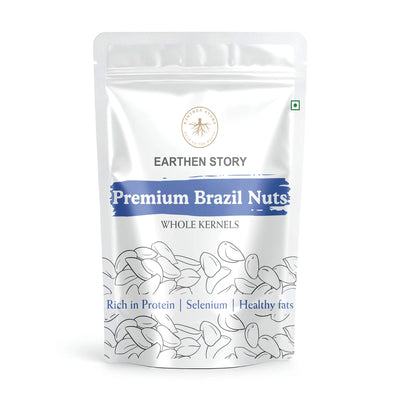
Natural Brazil nuts from Earthen Story are sourced without preservatives or additives - just the whole nut as it comes from the tree. One nut daily is genuinely sufficient for most adults. Two or three is fine. More than five or six daily over extended periods is inadvisable - selenium toxicity (selenosis) is possible at very high intakes, though it requires far more than a few nuts to reach.
Brazil Nuts and Thyroid Health
The connection between selenium and thyroid health deserves specific attention for Indian consumers, because thyroid disorders - particularly hypothyroidism and autoimmune thyroid conditions - are increasingly prevalent across urban India. The thyroid gland has one of the highest selenium concentrations of any organ in the body, and selenoproteins are essential for the conversion of T4 to the active T3 hormone.
Multiple clinical studies have found that selenium supplementation reduces thyroid antibody levels in patients with Hashimoto's thyroiditis - the most common autoimmune thyroid condition. While Brazil nuts are not a treatment for thyroid disease, adequate selenium intake is a legitimate part of thyroid health support, and most Indians are not getting it.
How to Eat Brazil Nuts Daily
The simplest approach is to keep a small jar of Brazil nuts on your desk or kitchen counter and eat one each morning alongside breakfast. They pair naturally with mamra almonds and dates in a simple morning nut mix, or can be incorporated into our no-bake coconut almond bark for a weekly batch preparation that makes daily consumption effortless.
For a broader picture of how seeds and nuts address nutritional gaps specific to Indian diets, see our guide on seeds as superfoods and our article on key nutritional deficiencies in urban India.
Looking for ways to put these ingredients to use? Browse our full recipe collection for ideas that make real food genuinely easy to cook.
For more ingredient guides, food system insights, and traditional food knowledge, explore the full Earthen Story Discover library.