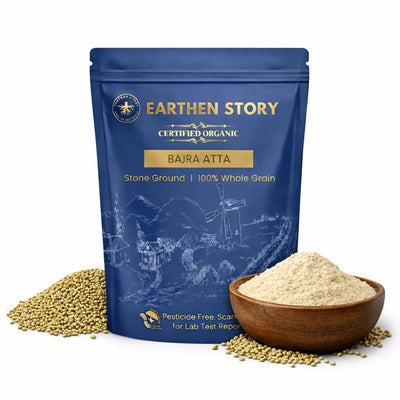
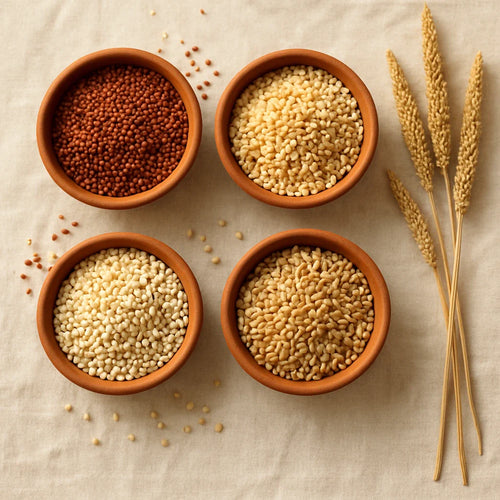
Bajra halwa is one of the oldest winter preparations in Rajasthani and North Indian kitchens - bajra flour roasted slowly in bilona ghee with jaggery produces a halwa that is dramatically darker, richer, and more intensely flavoured than sooji or wheat versions. The millet's natural nuttiness deepens as it roasts, and the jaggery adds a molasses-like warmth that refined sugar never achieves. Black raisins and mamra almonds fried in ghee at the start complete the picture. Bajra (pearl millet) was the primary grain of arid India for centuries - its return to the festival plate in the form of this halwa is a small but meaningful act of culinary restoration. For the ragi counterpart to this halwa tradition, the Ragi Halwa is the South Indian equivalent.
Ingredients
- ½ cup Earthen Story Bajra Flour Shop ↗
- 2½ tbsp Earthen Story A2 Cow Bilona Ghee Shop ↗
- ¼ cup jaggery powder
- 1½ cups warm water
- ¼ cup milk
- ½ tsp cardamom powder
- 2 tbsp Earthen Story Mamra Almonds, halved Shop ↗
- 1 tbsp Earthen Story Black Raisins Shop ↗
- 1 tsp Earthen Story Raw Forest Honey - optional, added off heat Shop ↗
Steps
- Heat ghee in a heavy-bottomed pan on medium. Add mamra almonds and black raisins and fry for 1 minute until the almonds are golden and the raisins have plumped. Remove with a slotted spoon and set aside.
- Add bajra flour to the remaining ghee in the pan. Reduce heat to medium-low. Roast, stirring continuously, for 7 - 9 minutes until the flour turns a deeper shade and smells distinctly nutty and toasted. Bajra needs a thorough roast - under-roasted bajra has a bitter, raw taste.
- Meanwhile, bring water and milk to a boil in a separate saucepan and dissolve the jaggery powder in it.
- Carefully pour the hot jaggery liquid into the roasted bajra flour, stirring vigorously to prevent lumps. The mixture will splutter - keep stirring.
- Cook on medium, stirring constantly, for 4 - 5 minutes until the halwa thickens, turns glossy, and begins to pull away from the sides.
- Add cardamom and stir. Remove from heat. If adding honey, wait until the temperature drops below 40°C.
- Top with the fried almonds and raisins. Serve warm.
Key Benefits
- Bajra flour for iron and energy in a warming format Bajra atta is one of the most iron-rich grains available - pearl millet contains more iron than wheat or rice. Bajra's high energy density made it the traditional winter grain of North India - this halwa is the most traditional and nutritionally appropriate way to eat it.
- A2 bilona ghee and mamra almonds for fat-soluble nutrient absorption A2 cow bilona ghee roasting enhances the bioavailability of bajra's fat-soluble compounds. Mamra almonds fried in ghee add vitamin E alongside the deep flavour that makes this halwa genuinely festive. The traditional use of bilona ghee in festival halwa preparations is nutritionally sound - the fat carries fat-soluble nutrients and adds the butyrate that supports gut health.
- Black raisins and jaggery for iron and mineral depth Black raisins provide concentrated iron and natural sugar alongside bajra's own iron content - making this halwa one of the most iron-rich traditional Indian desserts. Jaggery with raisins in a millet preparation was a traditional winter energy food across North India - the combination addressed multiple nutritional needs simultaneously.
Explore more recipes like this on our Recipes page, or read our ingredient guides and food knowledge articles in the Discover section.