The overnight rest transforms khapli wheat atta batter: the yoghurt begins a light fermentation that breaks down the phytic acid in the grain, improves the digestibility of the proteins, and develops a gentle tang that makes these pancakes taste like they were made in a bakery rather than a kitchen. You mix the batter in three minutes the night before. In the morning, the work is done. You just cook them. Ancient grains like emmer wheat respond particularly well to overnight fermentation - the technique unlocks nutrients that the grain holds tightly when unfermented. For a completely grain-free breakfast pancake, the Ragi Waffles with Ghee offer a similar nourishing morning format.
Ingredients
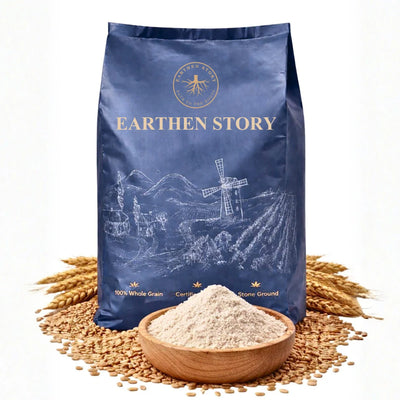
- 1 cup Earthen Story Khapli Wheat Atta Shop ↗
- ½ cup plain yoghurt
- ½ cup milk (adjust to consistency)
- 1 egg
- 1 tbsp jaggery powder
- ½ tsp baking powder (added only in the morning)
- Pinch salt
- Earthen Story A2 Cow Bilona Ghee - for cooking Shop ↗
- Earthen Story Raw Forest Honey - for serving Shop ↗
Steps
- The night before: whisk together khapli atta, yoghurt, milk, egg, jaggery, and salt until smooth. The batter should be pourable but not thin - similar to cream consistency. Cover and refrigerate overnight.
- In the morning: remove batter from refrigerator and let it come to room temperature for 10 minutes. Stir in baking powder just before cooking - adding it the night before would exhaust its leavening power.
- Heat a cast iron or non-stick pan on medium. Add a small amount of ghee and let it shimmer.
- Pour approximately ¼ cup batter per pancake. Cook until bubbles form across the surface and the edges look dry - about 2 minutes. Flip and cook for another 90 seconds until golden.
- Serve warm with a drizzle of raw forest honey (added after the pancakes cool slightly below 40°C to preserve the live enzymes) and fresh fruit if desired.
Key Benefits
- Overnight fermentation with yoghurt for improved digestion Resting khapli atta batter with yoghurt for 8 - 12 hours allows the lactic acid bacteria to begin breaking down phytic acid, which otherwise binds minerals like iron and zinc and prevents their absorption. Traditional Indian grains were almost always fermented or soaked before cooking - modern convenience shortcuts have cost us this nutritional advantage. Fermented grain preparations are more digestible and more nutritious than unfermented ones.
- Khapli wheat for lower gluten and gentler digestion Emmer wheat has a different gluten structure from modern wheat varieties - lower in absolute gluten content and containing gluten proteins that many people with wheat sensitivity find easier to tolerate. Khapli wheat flour is not gluten-free, but it is meaningfully gentler on the digestive system than modern high-yield wheat. For a biscuit version of this same gentle khapli character, the Khapli Honey Cardamom Cookies are equally satisfying without any fermentation.
- Raw forest honey for enzyme-rich topping Applied to slightly cooled pancakes, raw forest honey retains its live enzymes and antimicrobial compounds. The enzyme amylase in raw honey actually assists in the digestion of the carbohydrates in the pancakes - a functional pairing, not just a sweet one. Understanding what makes raw honey different from commercial honey explains why the cooling step before adding it is not optional. Cooking with A2 bilona ghee rather than refined oil adds butyrate and a naturally nutty flavour that completes the breakfast.
Explore more recipes like this on our Recipes page, or read our ingredient guides and food knowledge articles in the Discover section.