Why Stone-Ground Whole Wheat Flour Is Fundamentally Different from Packaged Atta
The atta most Indian families buy is roller-milled, stripped of bran and germ, and then partially fortified to compensate. Stone-ground chakki atta keeps everything intact. The nutritional difference is not marginal - it is structural.

Atta is the most consumed food in most Indian households. The roti on the plate at every meal, the paratha at breakfast, the puri at celebrations - all of it comes from wheat flour. Given this frequency, what happens during milling matters more than almost any other food processing decision a family makes.
The atta most urban Indian families buy today is roller-milled. The atta that most Indian families ate until the mid-twentieth century was stone-ground. The difference between these two processes is not a matter of tradition versus modernity. It is a matter of what survives the milling and what does not.
The Anatomy of a Wheat Grain
A wheat grain has three distinct parts: the bran (the outer fibrous layer), the germ (the nutrient-dense embryo that would become the new plant), and the endosperm (the starchy interior that makes up the bulk of the grain). All three are present in whole wheat and all three contribute different things to nutrition.
The bran provides insoluble fibre that supports gut motility and feeds beneficial gut bacteria. The germ contains B vitamins, vitamin E, essential fatty acids, and minerals including magnesium, zinc, and selenium. The endosperm is primarily starch - energy - with comparatively little nutritional complexity.
What Roller Milling Does
Industrial roller milling - the process used to produce most packaged atta and maida - passes wheat through a series of steel rollers that progressively separate the bran and germ from the endosperm. This is done primarily for shelf life: the oils in the wheat germ turn rancid within weeks at room temperature, which makes whole grain flour commercially inconvenient.
By removing the germ and most of the bran, roller-milled flour can sit on a shelf for six to twelve months without going rancid. The trade-off is that the flour has lost most of its B vitamins, virtually all of its vitamin E, the majority of its minerals, and most of its fibre. Some packaged attas are then partially fortified - iron and a few B vitamins added back - but fortification replaces only a fraction of what was removed, and in synthetic form rather than the bioavailable form present in the whole grain.
| Nutrient or Property | Roller-Milled Packaged Atta | Stone-Ground Whole Wheat Atta |
|---|---|---|
| Bran retained | Partially or fully removed | Fully retained |
| Wheat germ retained | Removed for shelf life | Fully retained with natural oils intact |
| Fibre content | Significantly reduced | Full - bran fibre intact |
| B vitamins | Mostly removed, some added back synthetically | Naturally present in whole form |
| Vitamin E | Virtually eliminated | Present from wheat germ |
| Minerals (Mg, Zn, Se) | Substantially reduced | Naturally present |
| Glycaemic impact | Higher - less fibre to slow glucose absorption | Lower - fibre slows starch digestion |
| Shelf life | 6 to 12 months | 3 to 4 months - refrigerate after opening |
What Stone Grinding Preserves
Stone grinding - the traditional chakki milling process - works differently. The grinding stones turn slowly, generating minimal heat, and mill the entire grain together rather than separating its components. The bran, germ, and endosperm are all ground together, which means the natural oils from the germ are distributed through the flour rather than removed from it.
This is why stone-ground whole wheat flour smells different from packaged atta. The aroma comes from the wheat germ oils - compounds that roller milling removes. It is also why stone-ground flour has a shorter shelf life: those same oils will turn rancid without refrigeration over time. The shorter shelf life is the clearest signal that the nutritional value is intact.
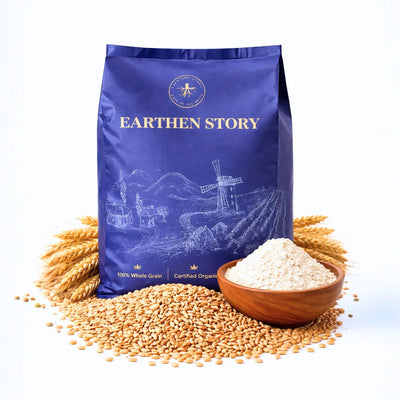
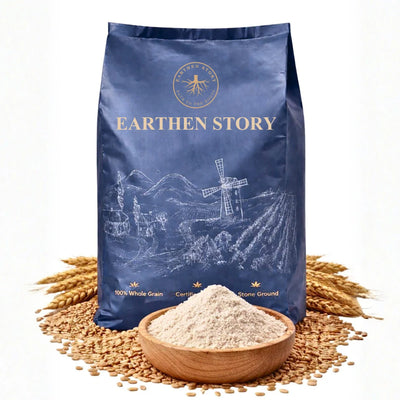
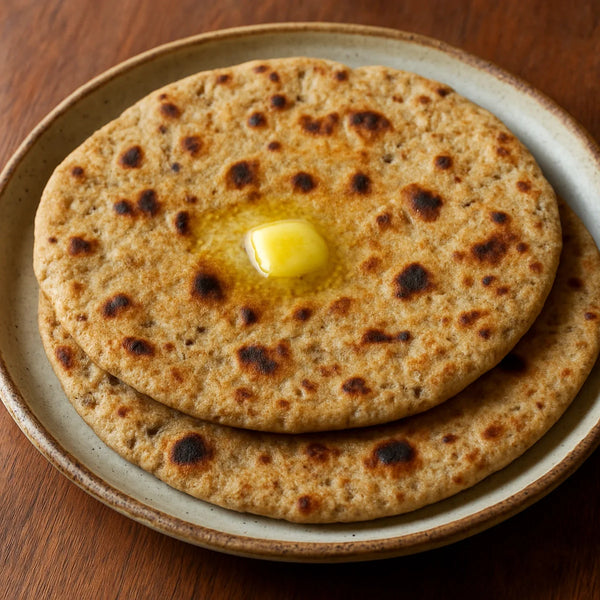
Our stone-ground whole wheat atta is milled from organically farmed, pesticide-tested wheat with the bran and germ fully retained. The rotis it produces have a slightly denser texture and a more pronounced wheat flavour than refined atta - both signs of the whole grain being present.
Khapli Wheat: An Additional Layer
Beyond the milling question, there is the wheat variety question. Most commercial atta is made from modern high-yield wheat varieties bred for the Green Revolution - optimised for yield and gluten content rather than nutritional complexity or digestive friendliness.
Khapli wheat - also known as emmer wheat or ancient wheat - is one of the oldest cultivated wheat varieties, largely displaced by modern varieties in the twentieth century. It has lower gluten content, a different protein structure that many find easier to digest, and a naturally lower glycaemic response. Our khapli wheat flour stone-ground from this ancient wheat variety offers both the milling benefit and the variety benefit simultaneously.
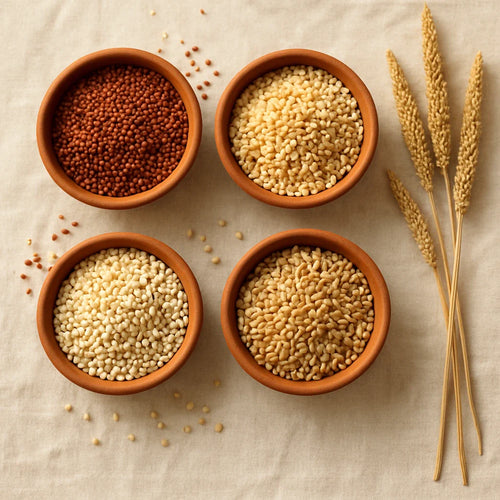
For those looking for a multigrain option, our stone-ground multigrain atta combines several whole grains for a more complex nutritional profile while maintaining the same whole-grain milling approach.
How to Make the Switch
Stone-ground whole wheat atta produces a slightly denser roti than highly refined atta. If your household is accustomed to very soft, pliable rotis from refined flour, the transition may take a few batches to adjust technique - slightly more water, slightly more resting time for the dough. Most households find the adjustment takes less than a week before the whole grain roti becomes the preferred version.
Store stone-ground whole wheat flour in a sealed container in the refrigerator after opening. Use within 60 to 90 days of the milling date for best flavour. The milling date matters more than the expiry date - fresh-milled whole wheat flour and three-month-old whole wheat flour are meaningfully different in both flavour and nutritional quality.
This connects directly to the broader question of how modern food processing has quietly changed what we eat without anyone deciding it should. As we explore in our article on why millets disappeared from Indian plates, the shift away from whole grains happened gradually, driven by industrial convenience rather than nutritional reasoning. Getting back to whole grain stone-ground flour is one of the easiest reversals available.
Looking for ways to put these ingredients to use? Browse our full recipe collection for ideas that make real food genuinely easy to cook.
For more ingredient guides, food system insights, and traditional food knowledge, explore the full Earthen Story Discover library.