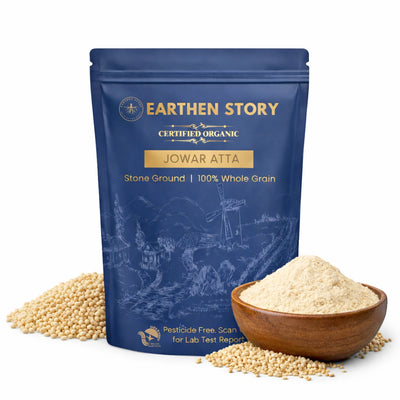
Dhokla made with jowar flour has a slightly more substantial texture than the besan version - a little denser, a little nuttier, with a clean flavour that takes the mustard seed tadka beautifully. The fermentation step, even a short one, adds a gentle tang and dramatically improves the digestibility of the grain. Fermented grain preparations are at the heart of traditional Indian snacking culture - dhokla, idli, and dosa all use this technique to make grains more digestible. This is the kind of snack that can be made the evening before and eaten at every temperature. For a crispy tawa version of jowar in a similar Maharashtra tradition, the Jowar Thalipeeth is the flatbread counterpart.
Ingredients
- 1 cup Earthen Story Jowar Flour Shop ↗
- ½ cup thick yoghurt
- ¼ cup water (approximately)
- 1 tsp ginger paste
- 1 green chilli, finely chopped
- ½ tsp salt
- 1 tsp Eno fruit salt (or ½ tsp baking soda + ½ tsp lemon juice)
- For tadka: 1 tsp oil, ½ tsp mustard seeds, 8 curry leaves, 1 green chilli sliced, 1 tsp sesame seeds, pinch of sugar, 2 tbsp water
Steps
- Mix jowar flour, yoghurt, ginger, green chilli, and salt into a smooth batter. Add water gradually to reach a thick but pourable consistency. Cover and rest for 2 hours (or overnight in the refrigerator for a better flavour).
- Prepare your steamer - bring water to a boil. Grease a flat dhokla tray or cake tin with oil.
- Just before steaming, add Eno (or baking soda + lemon) to the batter and stir vigorously until it becomes frothy and slightly aerated. Work quickly.
- Pour batter into the greased tray immediately and place in the steamer.
- Steam on high for 12 - 15 minutes until a toothpick inserted in the centre comes out clean. Do not lift the lid during steaming.
- For the tadka: heat oil, add mustard seeds and let them pop, then add curry leaves, sliced chilli, and sesame seeds. Add water and sugar, simmer for 30 seconds, then pour over the dhokla immediately.
- Cut into squares after 5 minutes. Serve with green chutney.
Key Benefits
- Jowar flour for gluten-free fermented snacking The short fermentation of jowar atta batter with yoghurt increases the bioavailability of iron and zinc in the grain through phytic acid reduction. Sorghum and other millets were always prepared with fermentation or soaking in traditional Indian cooking - modern convenience shortcuts have cost us this nutritional advantage.
- Steaming as a zero-oil cooking method Dhokla is one of the rare Indian snacks that requires no frying at any stage. The contrast with packaged snacks - which are almost universally fried in refined oils - could not be greater. Steaming preserves all the water-soluble vitamins in the batter while creating a texture that deep-frying cannot replicate.
- Yoghurt for protein and probiotic activity Full-fat yoghurt in the batter adds protein and beneficial bacteria that survive the short fermentation and contribute to gut microbiome diversity. Dairy fermentation combined with grain fermentation is a nutritional partnership that Ayurvedic cooking understood intuitively - the modern science of prebiotics and probiotics has since confirmed why.
Explore more recipes like this on our Recipes page, or read our ingredient guides and food knowledge articles in the Discover section.