Thalipeeth is the Maharashtrian breakfast that has quietly been ahead of every health trend for centuries - multi-grain, high-fibre, cooked in minimal fat, portable when cold, and genuinely delicious when fresh from a heavy tawa. Traditional Maharashtra food culture understood the value of millet-based flatbreads long before modern nutrition science caught up. The jowar flour version is slightly crispier than the traditional bhajani thalipeeth and has an earthy, nutty flavour that pairs perfectly with cold yoghurt or a spoon of homemade pickle. For a baked jowar format that showcases the same flour's versatility in a global context, the Jowar Pizza Base proves this ancient grain works just as well with Italian toppings.
Ingredients
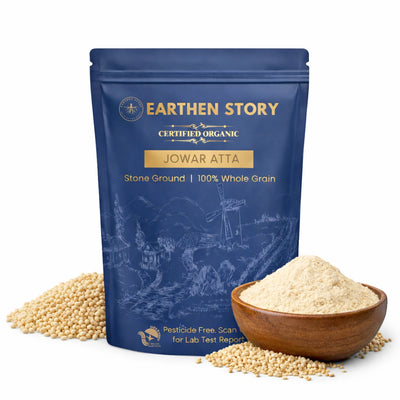
- 1 cup Earthen Story Jowar Flour Shop ↗
- 1 small onion, finely chopped
- 2 tbsp fresh coriander, finely chopped
- 1 tbsp sesame seeds
- 1 green chilli, finely chopped (optional)
- ½ tsp cumin seeds
- ½ tsp salt
- ¼ tsp turmeric powder
- Warm water - as needed
- Cold-pressed oil - for cooking
Steps
- Combine jowar flour, onion, coriander, sesame seeds, chilli, cumin, salt, and turmeric in a bowl. Mix well.
- Add warm water gradually, mixing to form a soft, pliable dough. Jowar dough should be softer than chapati dough - it will not roll easily, and that is expected.
- Divide into 4 portions. Wet your palms with water and flatten each portion directly onto a greased tawa or directly onto parchment paper by pressing with your fingers - do not try to use a rolling pin.
- Aim for approximately 5 - 6mm thickness with a roughly round shape. Make a small hole in the centre of each thalipeeth with your finger - this helps it cook evenly.
- Heat a cast iron tawa on medium. Place the thalipeeth on it (slide off the parchment if using). Drizzle a few drops of oil around the edges and in the centre hole.
- Cook for 3 - 4 minutes until the bottom is golden and crispy. Flip carefully and cook the other side for another 3 minutes.
- Serve hot with cold yoghurt, green chutney, or white butter. Thalipeeth is best eaten immediately - it softens as it cools.
Key Benefits
- Jowar atta for high-fibre gluten-free daily eating Thalipeeth made with jowar flour provides 3 - 4 g of dietary fibre per piece, significantly more than white bread or a regular paratha. Most packaged breakfast items deliver a fraction of this fibre while adding refined carbohydrates that cause blood sugar spikes.
- Onion and sesame for allicin and mineral density Onion contributes quercetin and prebiotic inulin; sesame adds calcium, zinc, and copper. The combination in a simple flatbread represents a far denser micronutrient package than its appearance suggests. Traditional flatbreads were always multi-ingredient for exactly this reason - the spices and vegetables were never decorative.
- A traditionally balanced single-dish breakfast Thalipeeth is designed to be a complete breakfast - grain, fat, and vegetables in one piece, eaten with dairy (yoghurt). The disappearance of millet-based flatbreads from Indian breakfast tables in favour of maida-based bread is exactly the nutritional regression that the millet revival is trying to reverse.
Explore more recipes like this on our Recipes page, or read our ingredient guides and food knowledge articles in the Discover section.