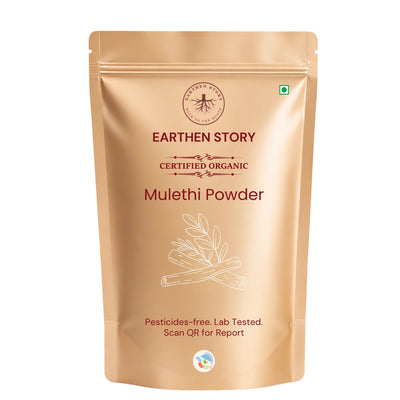
This is the tea you reach for when your throat is sore, your energy is low, and you want something that actually does something. Mulethi powder - licorice root - has been used in Ayurvedic medicine for throat, respiratory, and adrenal support for over three thousand years; fresh tulsi adds its own antimicrobial and adaptogenic dimension; and raw forest honey binds it all together with a sweetness that only works when the honey is added below 40°C. This combination is one of the most complete examples of Ayurvedic functional beverage design - every ingredient was chosen for a specific effect, and the effects are synergistic. For the morning cleansing version that uses similar herbal logic in a different format, the Triphala and Amla Morning Cleanser is the companion dawn ritual.
Ingredients
- ½ tsp Earthen Story Mulethi Powder Shop ↗
- 5 - 6 fresh tulsi (holy basil) leaves
- 1 tsp Earthen Story Raw Forest Honey (added only when below 40°C) Shop ↗
- 200 ml water
- ¼ tsp fresh ginger, grated - optional
- ¼ tsp black pepper - optional, for extra warmth
Steps
- Bring water to a boil in a small saucepan.
- Add mulethi powder, fresh tulsi leaves, and ginger if using. Reduce heat and simmer on low for 5 - 7 minutes. The water will turn a golden amber with a faint licorice aroma.
- Add black pepper if using in the last minute of simmering.
- Strain into a cup and allow to cool for 3 - 4 minutes until the temperature drops below 40°C.
- Stir in raw honey only after this cooling step - heating honey above 40°C destroys its live enzymes and antimicrobial properties.
- Drink slowly. This tea is most effective sipped over 10 - 15 minutes rather than consumed quickly.
Key Benefits
- Mulethi for throat soothing and adrenal support Mulethi powder (glycyrrhiza glabra) contains glycyrrhizin, a compound with documented anti-inflammatory, antiviral, and adrenal-supportive properties. Licorice root has been used in both Ayurvedic and Chinese medicine for throat and respiratory conditions for millennia - the modern science of its active compounds confirms what practitioners observed for centuries.
- Tulsi as a synergistic adaptogen and antimicrobial Fresh tulsi leaves contain eugenol, rosmarinic acid, and other volatile compounds with documented antimicrobial and stress-reducing properties. Tulsi's adaptogenic effects work through the HPA axis in the same pathway as ashwagandha - the two herbs are complementary rather than redundant. In this tea, tulsi and mulethi work together on both the immune and nervous systems simultaneously.
- Raw honey added at low temperature for maximum antimicrobial effect Raw forest honey contains hydrogen peroxide, methylglyoxal, and defensin-1 - antimicrobial compounds that are denatured by heat. Adding it to cooled tea preserves all of these completely. The combination of honey with medicinal herbs in warm water is one of the oldest delivery mechanisms in traditional medicine - the honey improves palatability while simultaneously contributing its own therapeutic compounds.
Explore more recipes like this on our Recipes page, or read our ingredient guides and food knowledge articles in the Discover section.